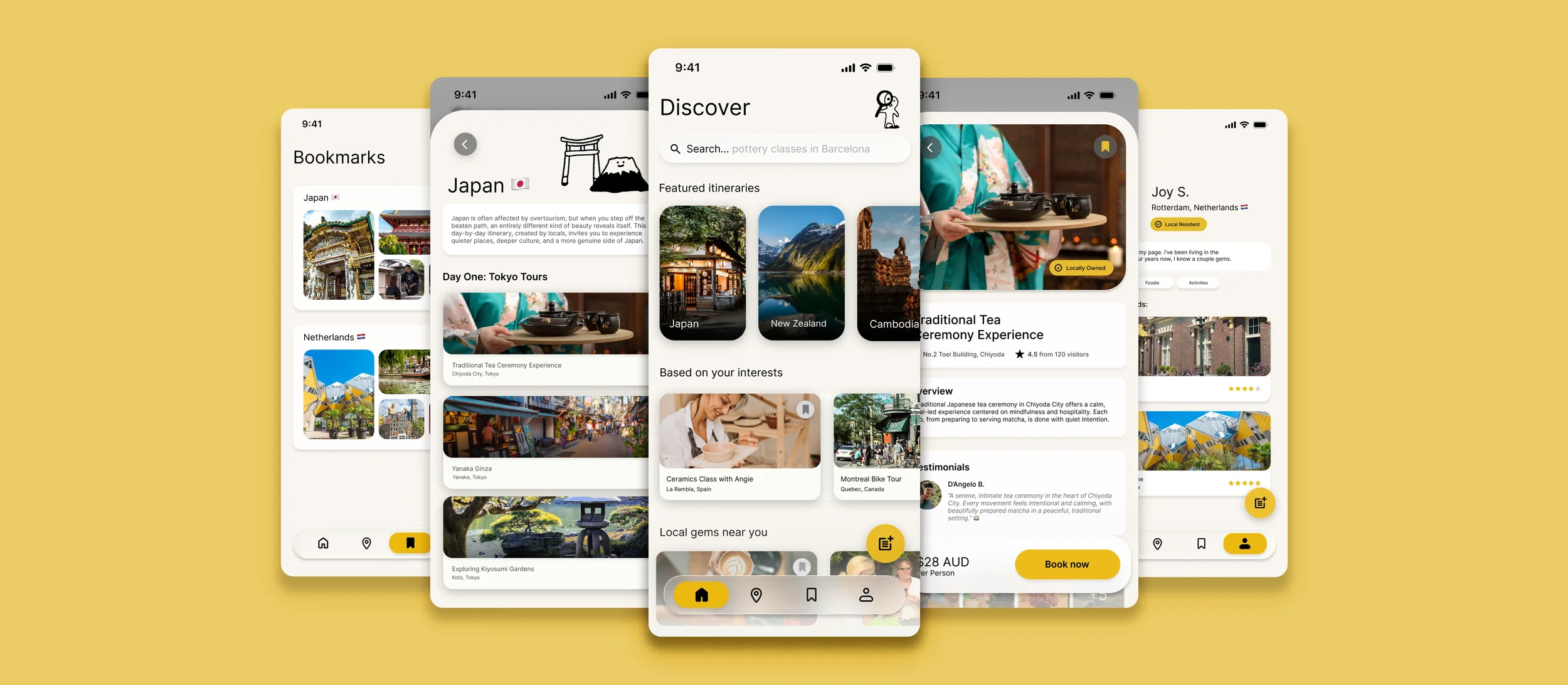
Local Gems
Project Scope:
End-to-End App
Role:
UX Research, Branding, UX/UI Design
Local Gems helps people discover and book authentic, non-touristy experiences curated by locals.
The Issue
Planning a trip should feel exciting, but for many people, it quickly becomes overwhelming. With endless recommendations across Google, TikTok, and travel blogs, it’s hard to know what’s actually worth doing.
Most platforms prioritise what’s popular, not what’s meaningful. As a result, travellers often find themselves in the same crowded spots, following the same itineraries, and missing out on the places that make a destination feel truly unique.
HOW CAN TRAVELLERS EXPLORE AUTHENTICALLY WITHOUT LEAVING A NEGATIVE FOOTPRINT?
RESEARCH OBJECTIVES
Through user interviews and surveys, I wanted to:
Understand how travellers currently discover activities and local experiences
Investigate how travellers plan and organise itineraries
Identify barriers small business face in being discovered by new customers
RESEARCH Insights
I found three key points of research that guided the design of the app.
discovery is scattered
Most travellers rely on 3-4 different platforms to find activities. Jumping from different social media apps and blogs. No single source feels fully trustworthy, leading to a fragmented and inefficient discovery process.
planning is overwhelming
All participants saved content across multiple apps, with many restoring to unorganised notes, screenshots or spreadsheets to organise their trips. Despite spending significant time planning, most still make decisions on the day.
authenticity drives decisions
All travellers expressed a strong preference for unique, local experiences that feel personal and uncrowded. However, these are often the hardest to find.



It was clear travellers needed a reliable way to discover authentic local spots without jumping between platforms.
I found that both novice and experienced travellers seek authentic, local experiences, while some look for guidance to avoid tourist traps, others are searching for deeper, more meaningful ways to explore.
target audience
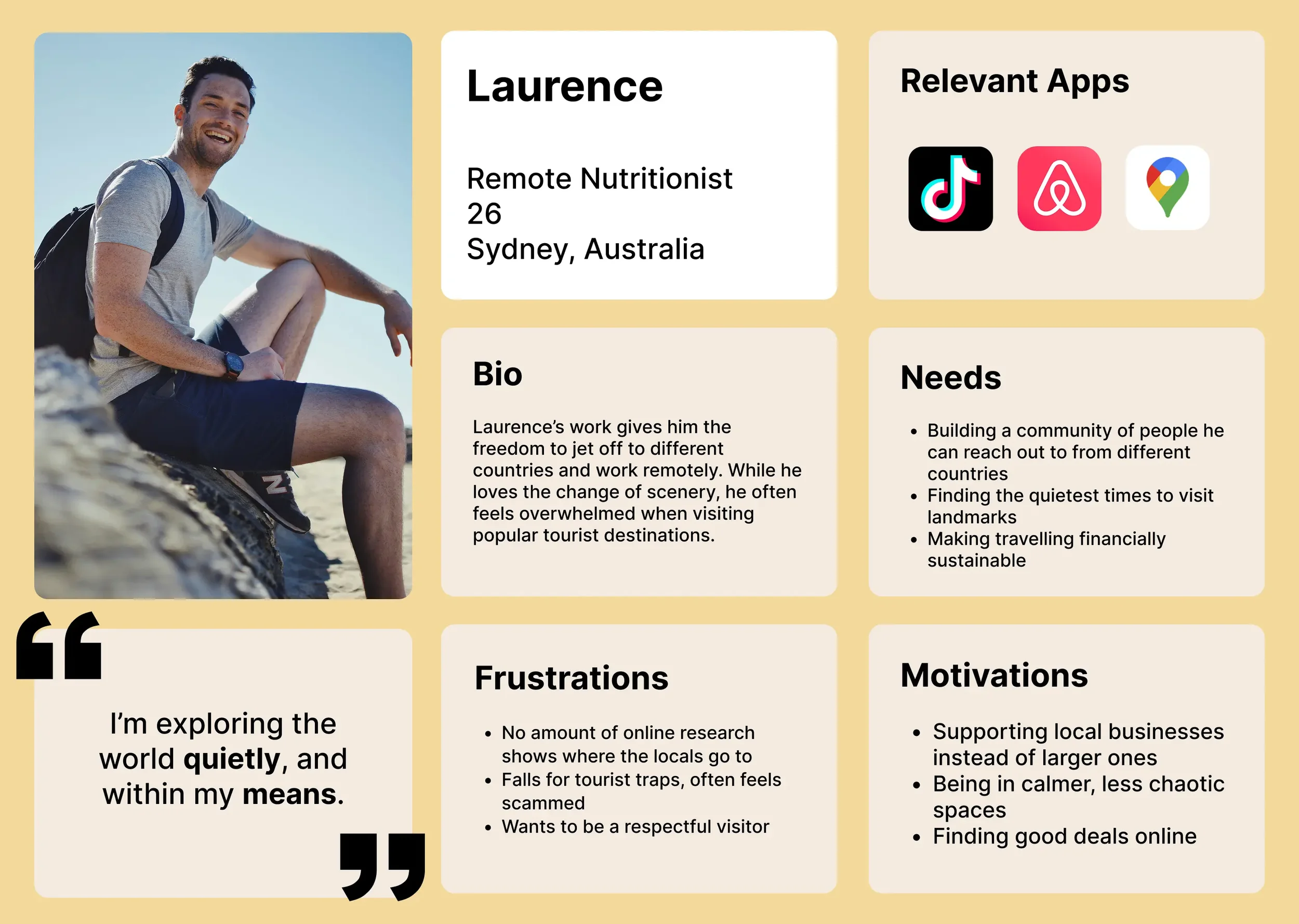
Persona #1: the quiet traveller
These travellers dislike large crowds and falling for hiked up tourist prices. These travellers usually spend more time looking through online guides and forums to find hidden gems, but struggles to find in-person recommendations through actual locals. These difficulties may be due to local businesses not being well advertised online. Their biggest roadblock is struggling to find quieter activities and places, and ending up in tourist traps.
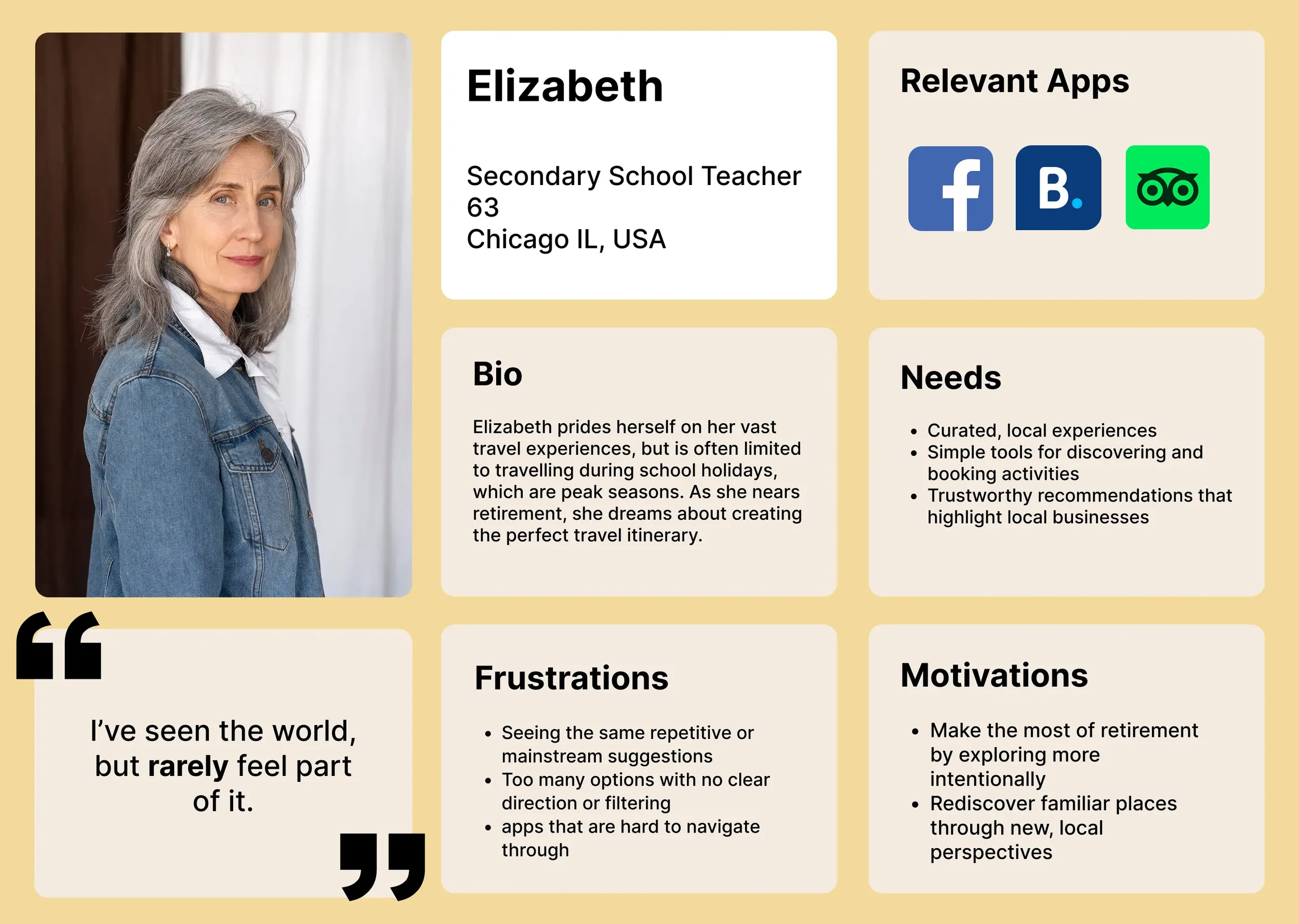
Persona #2: the experienced traveller wanting more
These travellers are experienced in travelling, but have often gone through cruises and guided tours that limit what they can see and do. These travellers struggle to find more authentic experiences as many of the activities and places are limited by word of mouth. Their biggest roadblock is not knowing where to look, or who to talk to for these local gems.
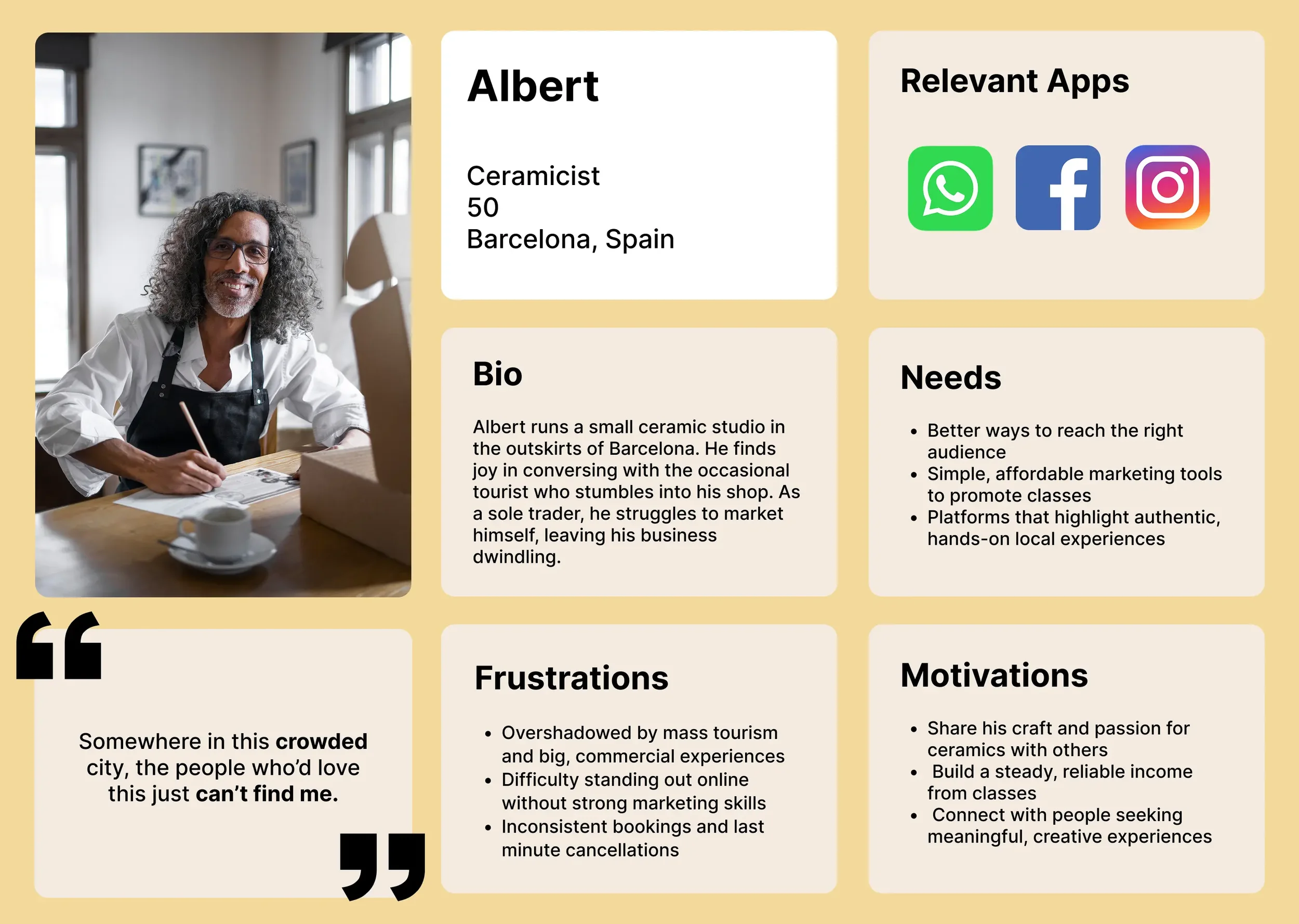
Persona #3 - the small business owner
These owners find joy in their work, often opening from a place of passion. These owners may struggle to successfully market themselves, especially in known tourist areas, as travellers may flock to more known businesses.
A key takeaway for both personas is the idea of connection, whether it’s to find a place or activity that is more personal to you, or rediscover a place that you once thought you saw everything there was to see.
Which led me to think:
how might we…
Help travellers discover authentic, locally loved experiences?
Find the best time for travellers to avoid crowds and visit well known spots?
Bring together scattered content into one seamless discovery experience?
travel like a local, not a tourist.
Ideation
How might I build trust between travellers and small local businesses? How can I help travellers discover hidden local experiences but also let them have the best experience when visiting known places? How can I integrate discovery, planning, and booking into one seamless experience?
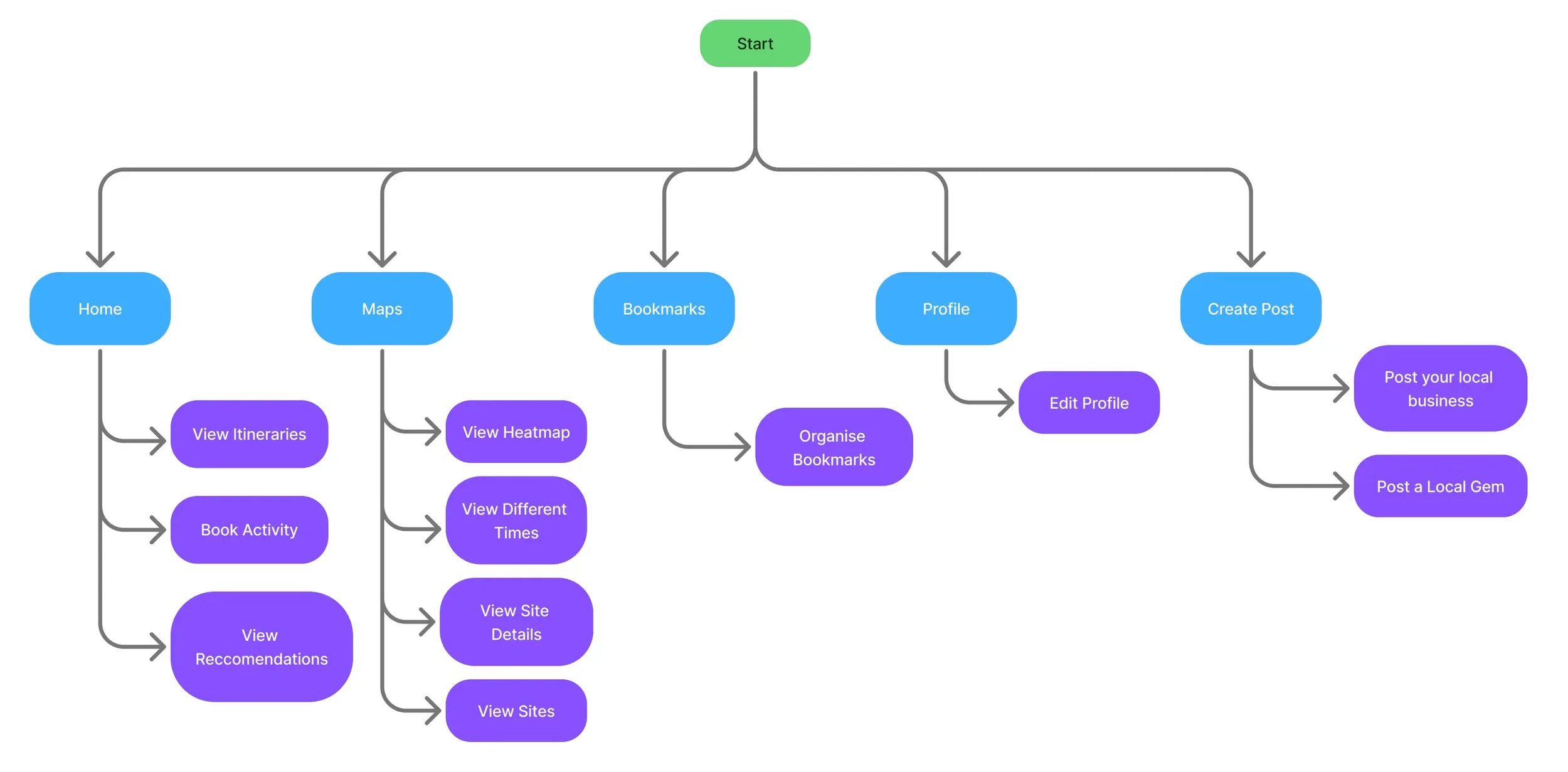
A clear sitemap that outlines the basic tasks travellers can do throughout the app.
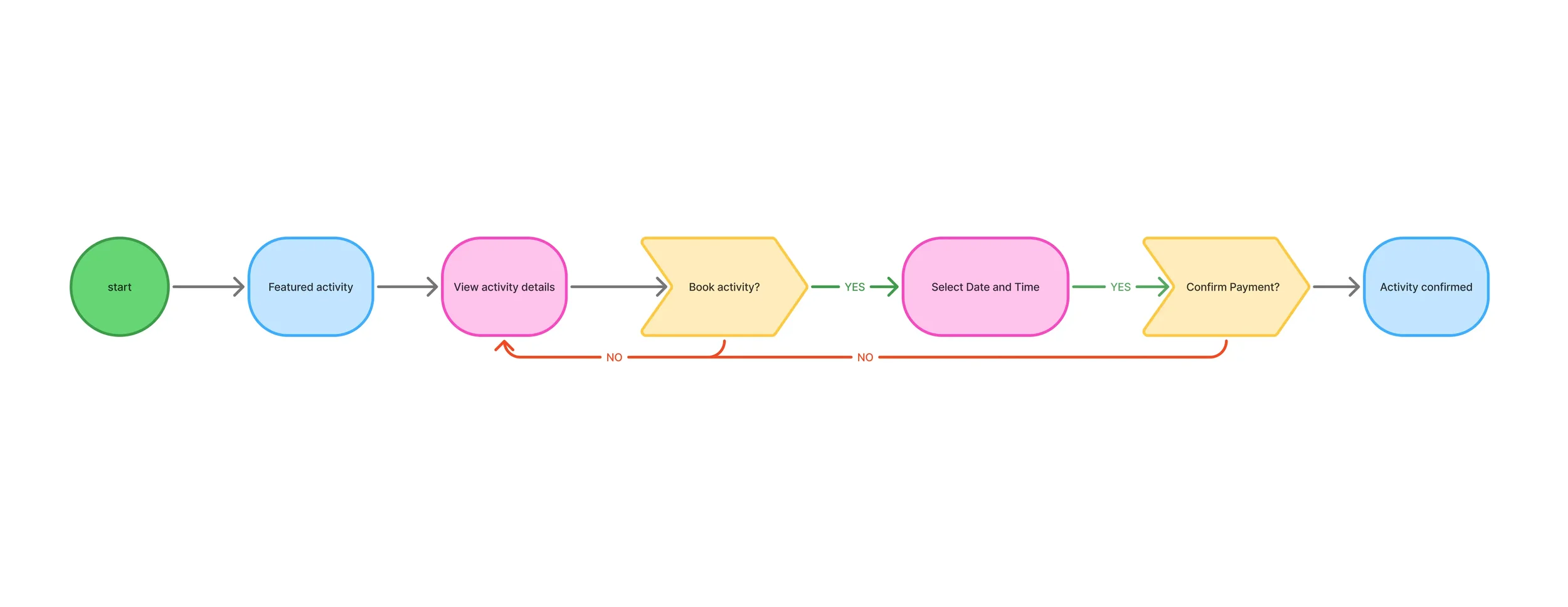
A basic user flow showing how a user may find an activity and book it in the app.

wireframes
Based on my research, I wanted to focus on creating exposure for lesser known businesses, and creating a seamless experience for travellers to find and book places and activities.
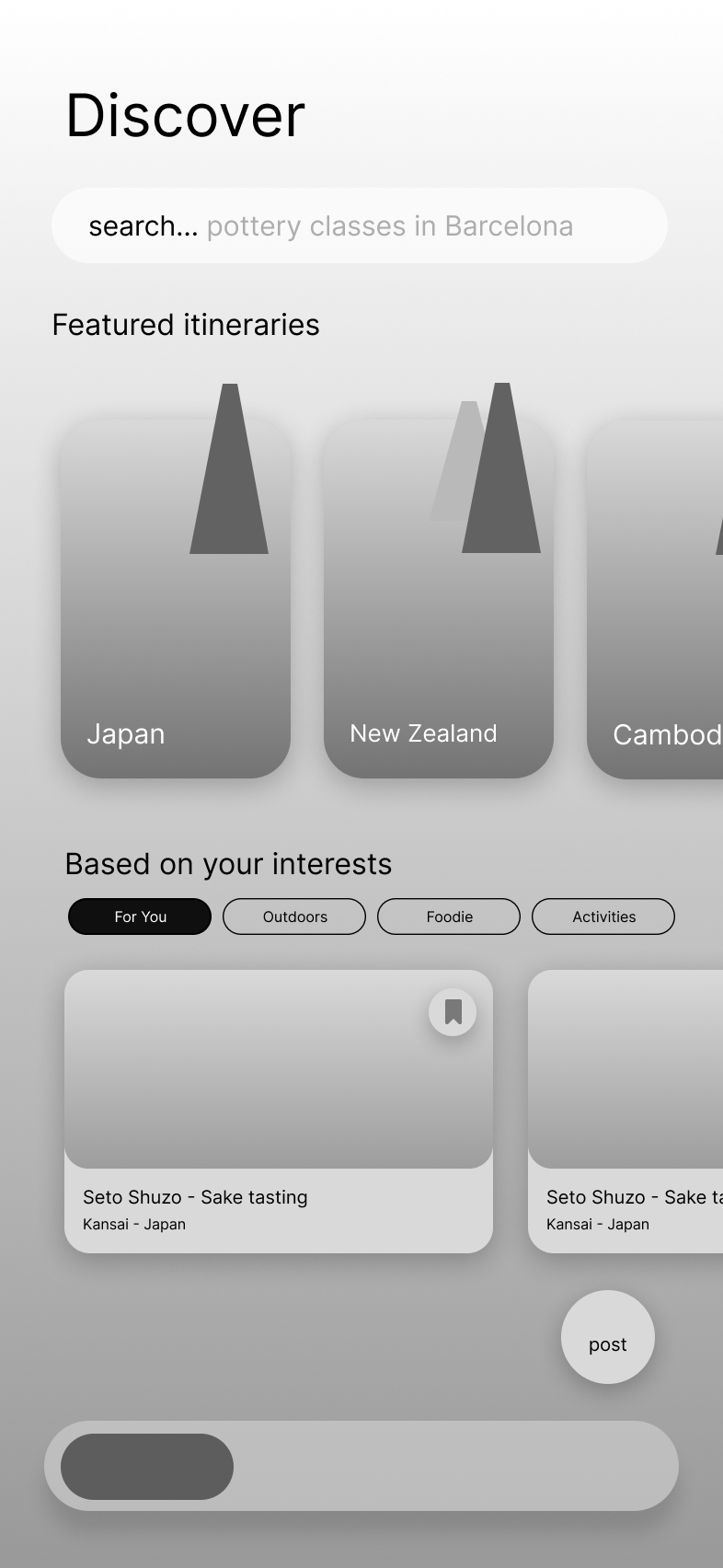
discovery page
Users can find featured itineraries, and filter recommended activities and places to best suit their needs
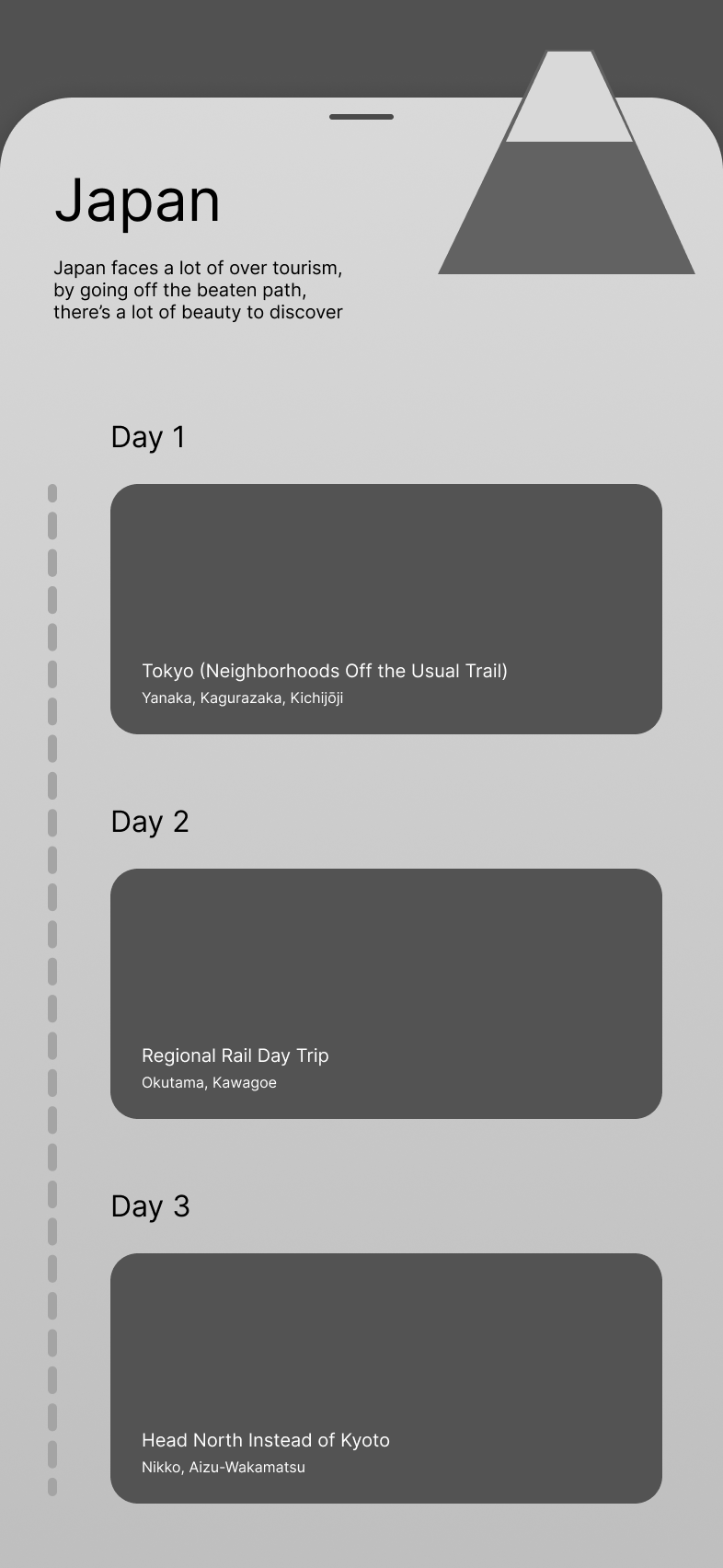
tailor made itineraries
Users find tailor made local itineraries for countries they’re interested, these highlight lesser known towns and cities.
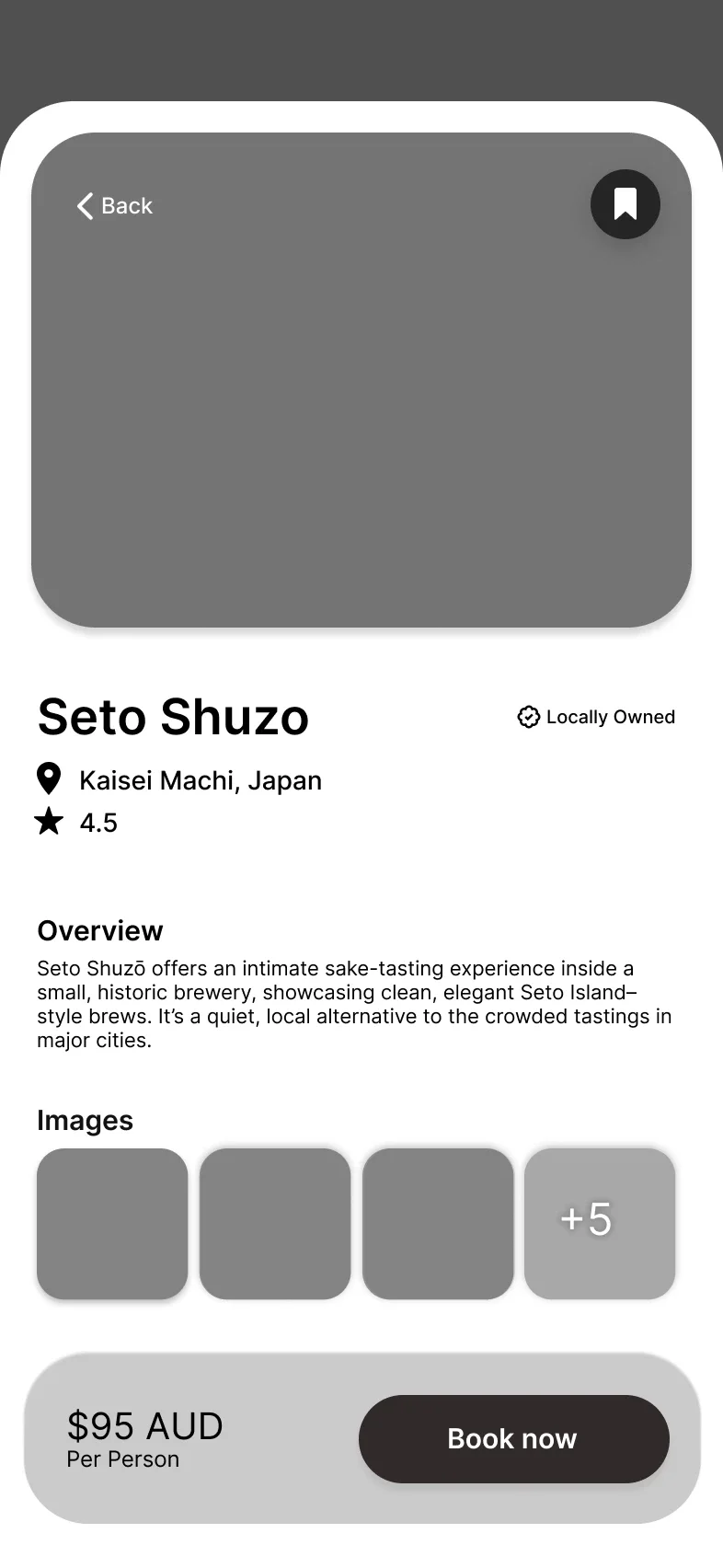
explore places
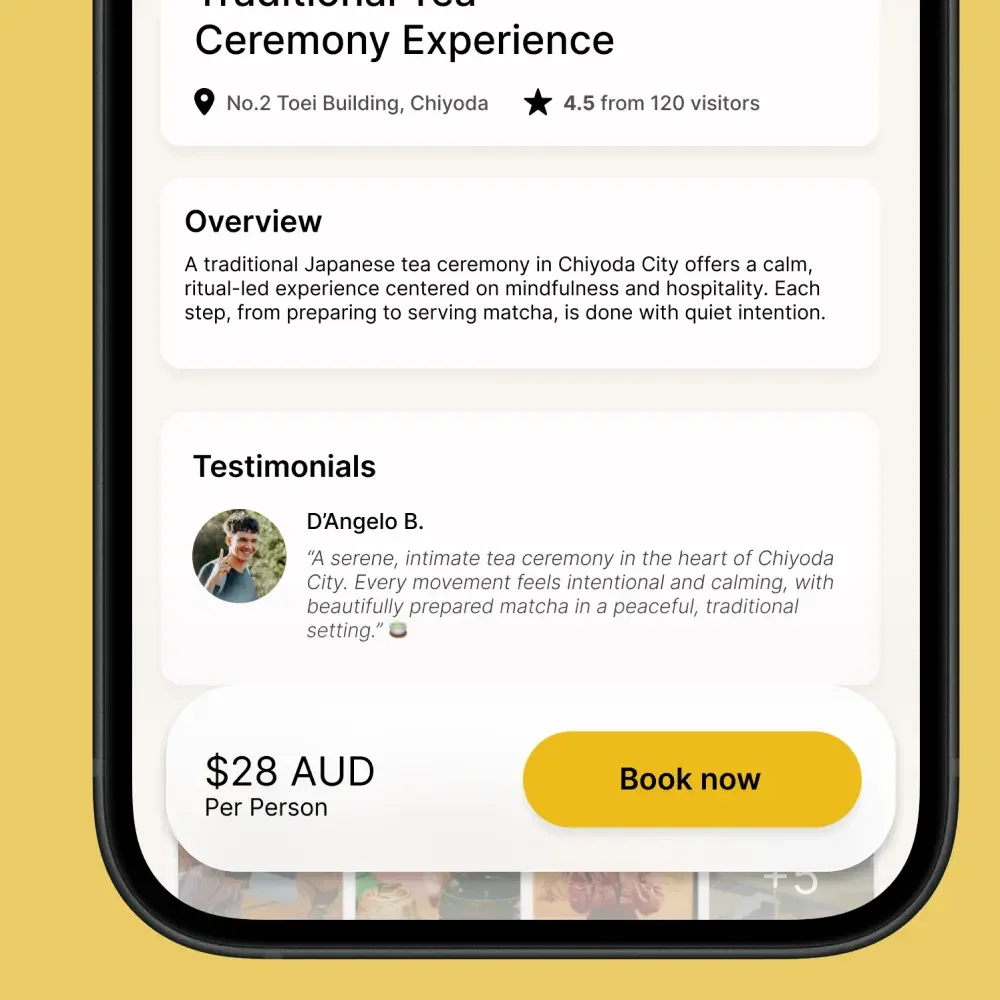
Users can find details of places and activities, as well as reviews, photos, and a way to book online.
Key functions
After designing the wireframes, I wanted to bring them to life. Yellow, a colour tied to happiness and optimism, felt like a natural fit and a bold departure from the muted palettes most travel apps default to. I added hand-drawn illustrations and small characters to bring a sense of wonder and playfulness to the experience.
Discover
The app shows curated itineraries as inspirations, as well as activities and places near you.
Maps
Popular spots are too good to miss sometimes, maps allows users to find the hotspots in order to find the quietest times to visit.
Post
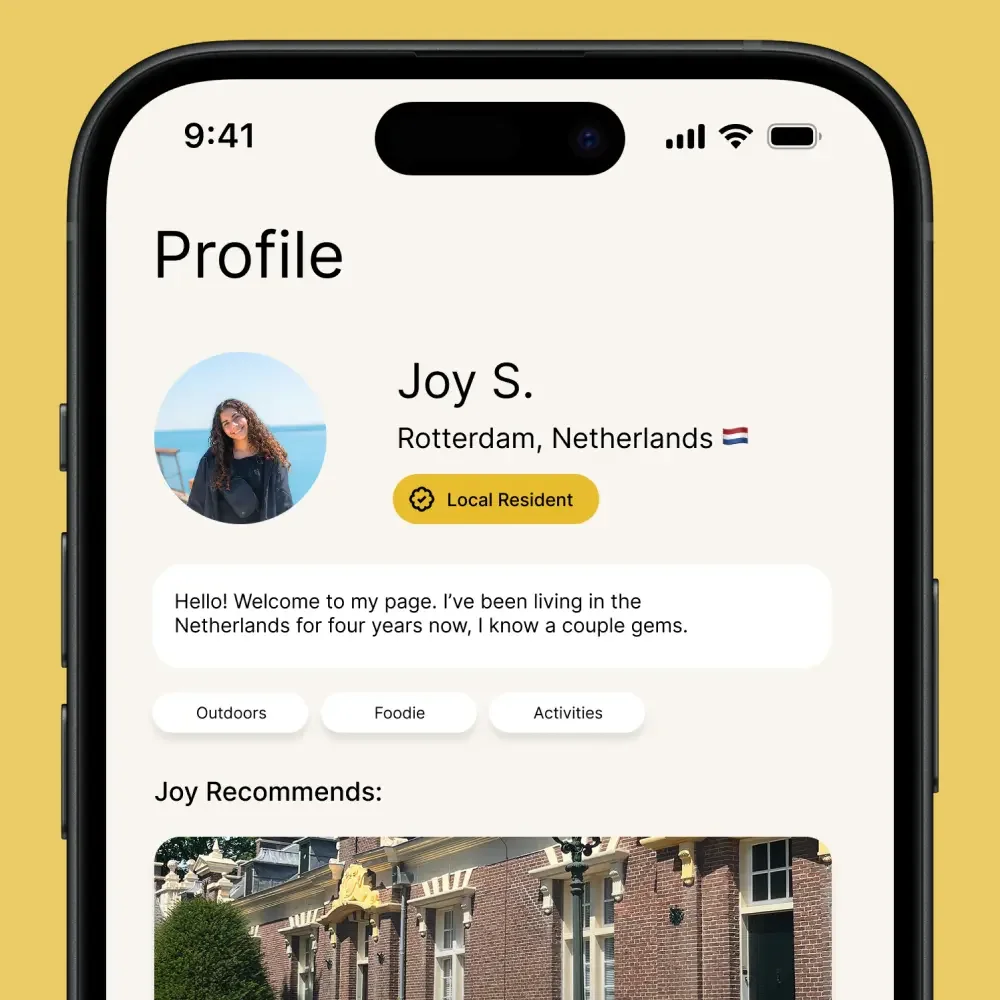
Users can share their own local gems, along with a review and a description of it.
Testing Objectives
VALIDATE CONCEPT
Gathering feedback would help refine whether the concept resonates with both travellers and supports small local businesses effectively.
OBSERVE USER FLOW
I wanted to watch how users navigate the app and find out whether discovery, saving, and booking activities feel intuitive. Highlighting if any users experience friction.
BENCHMARK BRANDING
I wanted to understand how users perceive the brand. I wanted to consider its visual identity and overall tone, and whether it communicates trust and authenticity
Usability Results
Users clearly understood the app’s purpose as a platform for discovering authentic, local experiences. All participants successfully completed key tasks: booking, posting/reviewing, and using the map, indicating an intuitive user flow.
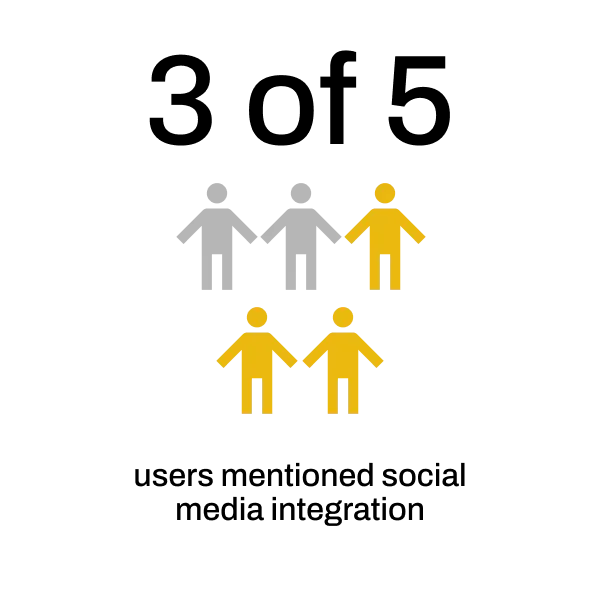
Trust emerged as a key factor, with all users relying heavily on reviews and testimonials, highlighting the need for greater visibility of social proof. Users also identified an opportunity to enhance discovery through social media integration, particularly importing content from TikTok and Instagram.


ITERATIONS & REFINEMENT
Based on usability testing, several key improvements were made to enhance trust, discovery, and overall usability.
Rating and Review System
This was introduced to strengthen trust between users and activities, making social proof more visible and influential in decision-making.
Bookmark Collections and Social Media
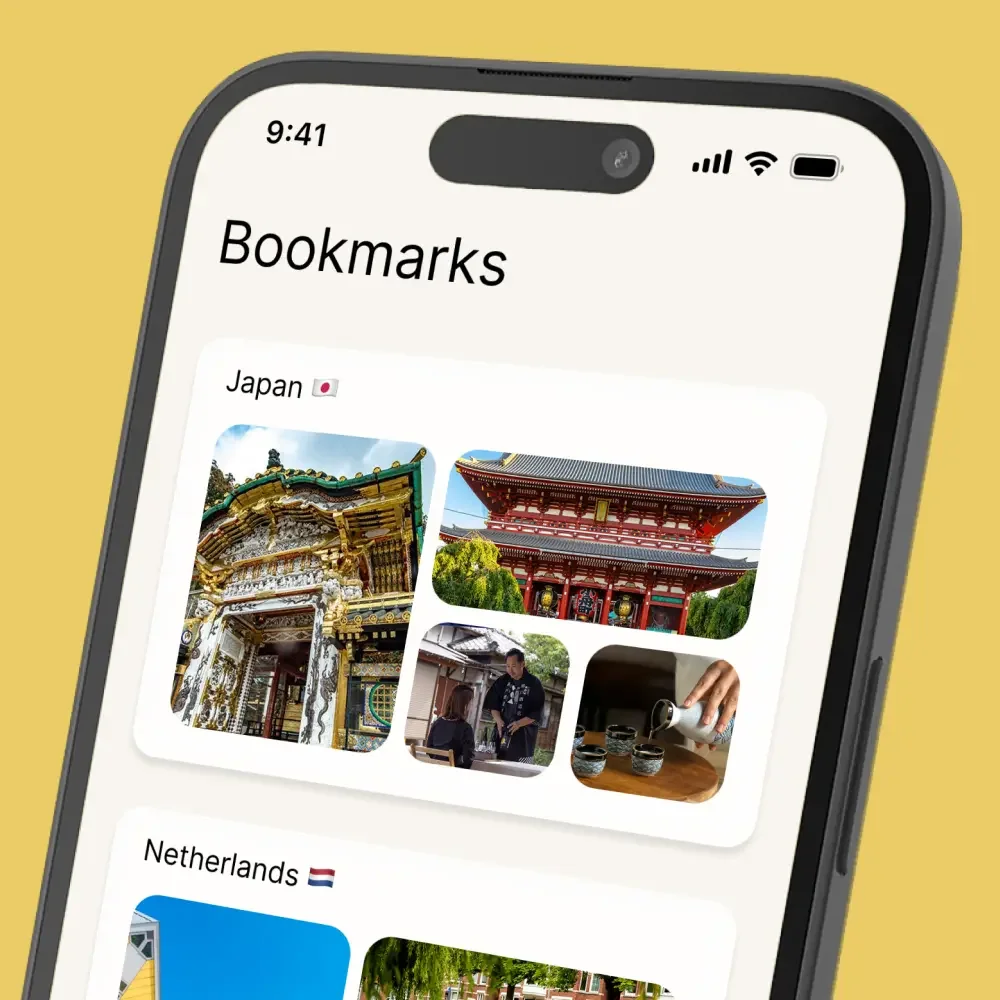
To support trip planning across multiple destinations, bookmark collections were added, allowing users to organise saved activities by country or trip.
Discovery was further enhanced through social media integration, enabling users to import and save content from platforms like TikTok and Instagram—aligning with existing user behaviours.
Time-Based Heatmap
Finally, the map experience was refined by introducing a time-based heatmap, allowing users to adjust the time of day and see how crowd levels change, helping them plan visits more effectively.
These iterations ensure Local Gems better supports both intentional planning and spontaneous discovery, while aligning closely with user needs and expectations.
Final Prototype
Nice to Haves
While the following features aren’t in the prototype, these features would enhance overall user experience and target a larger range of users.
Ai integration
I would use AI to enhance recommendations and personalise the user experience
Small Business Section
Small businesses can register their businesses in the app, and manage bookings.
Discounts
To make this app competitive with other travel apps, an exclusive “Local Gems” discounts offered by small businesses to attract travellers
Key Takeaways
Local Gems was inspired by my own travel experiences, feeling overwhelmed in places full of tourists and noticing the real impact it has on local environments and communities.
This project explores a more intentional way to travel. By highlighting small businesses and local experiences, the goal is to help users feel like they’re making more meaningful, positive choices.
While it’s just one approach to a complex issue, it shows how design can guide behaviour toward more conscious and authentic travel.